Resmi Biyografisi Mishkin-Kalem
· Shiraz — · ʻAkká
Şair, astronom, misyoner ve yeni bir çağın şafağını temsil eden kalem.
Arşiv Kaydı
| Doğum Adı | Mírzá Ḥusayn-i-Iṣfahání |
|---|---|
| Doğdu | · Shíráz, Fars Province, Persia |
| Öldü | (aged ~88) · ʻAkká, Ottoman Syria |
| Dinlenme Yeri | Bahjí, Acre (Akko), Israel |
| Unvanlar |
Mishkín-Qalám (“Musk-Scented Jet-Black Pen”, honorific bestowed by Náṣiri'd-Dín Sháh) Apostle of Bahá'u'lláh |
| Stiller |
Nastaʻlíq
Şikeste
Nesih
Sülüs
Ayna Betiği
Tırnak Komutu
Zoomorfik (Figüral)
|
| Tanındığı Eserler | ... nin kaligrafik çizimi En Yüce İsim (Yá Bahá'u'l-Abhá), Sacred Scribe to Bahá'u'lláh, Calligraphy on the Báb's Sarcophagus, Micrography & Nail-Etching |
| Etkin Yıllar | – |
| Miras |
Parents: Ḥájí Muḥammad-ʻAlíy-i-Iṣfahání & Fátimih Spouse: Ágá Bigum · Children: Sháh Bigum, Mírzá ʻAlí-Akbar |
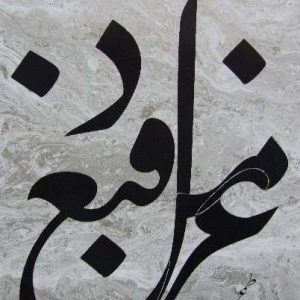
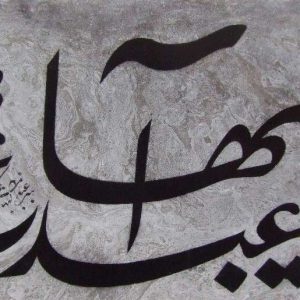
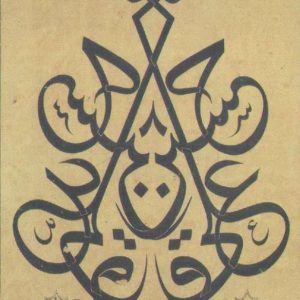
19. yüzyıl Pers dünyasının usta hattatı, şairi, astronomu ve mutasavvıfı ve şu eserin hat tasarımının yaratıcısı: En Yüce İsim used by Bahá’ís worldwide.
Mishkín-Qalam was born in the early nineteenth century in Persia and would go on to become one of the most celebrated calligraphers of his age. Born Mírzá Ḥusayn-i-Isfahání, his extraordinary talent carried him from a chance encounter in a Tehran bazaar to the royal court, where his skill earned him recognition among the highest circles of Persian society.
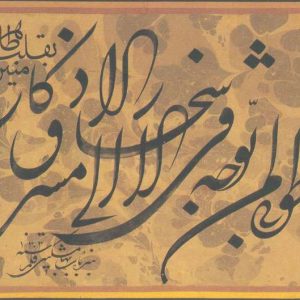
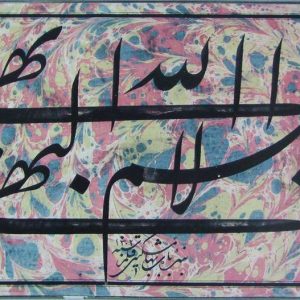
Trained in the classical Persian calligraphic traditions, he mastered nastaʻlíq, naskh, shikastih, and nail scripts. He later became renowned for combining multiple scripts within a single composition, a remarkable technical achievement that drew comparisons to the great sixteenth-century master Mír ʻImád.
Yine de onun hikayesi sanatsal başarının çok ötesine uzanmaktadır. İnsanlığın birliği hakkındaki inançlarının peşinden gitmek için saraydaki ayrıcalıklı hayatını geride bırakmıştır. Bu karar; tutuklanmaya, Kıbrıs'ta dokuz yıl hapse ve ömür boyu sürgüne yol açmıştır. Tüm bunlara rağmen üretmeye devam etmiş ve nesiller boyunca etkisi süren bir eserler bütünü bırakmıştır.
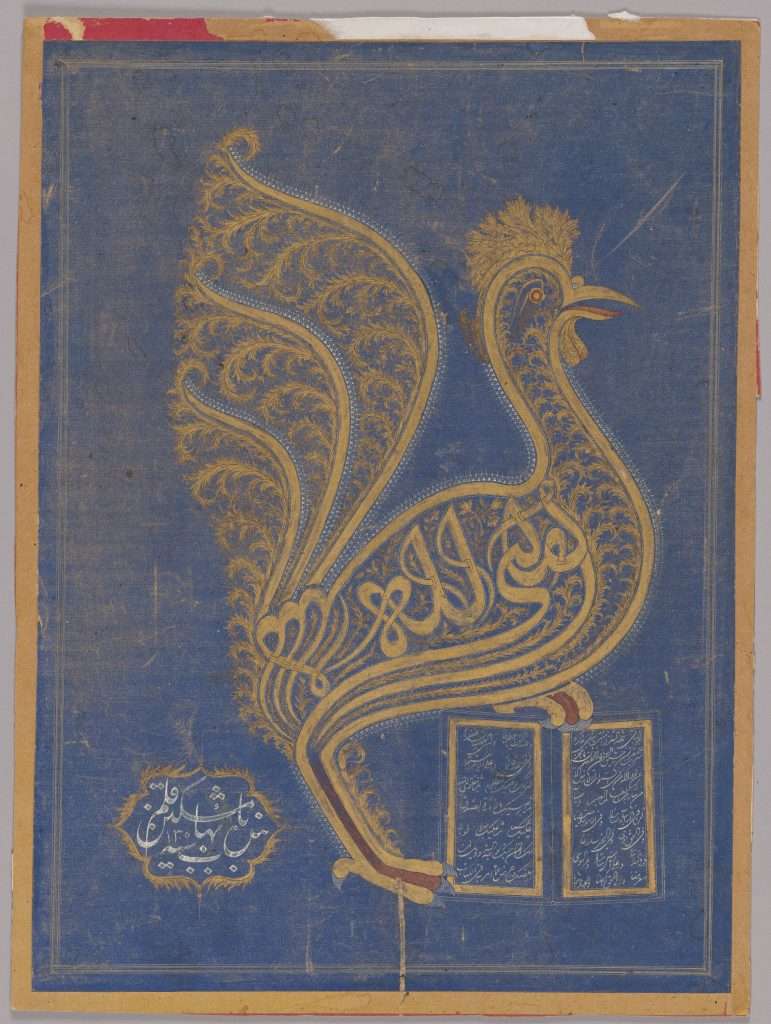
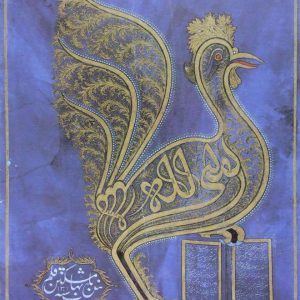
En Büyük İsim'in kendine özgü yorumu en tanınmış eserleri arasında yer almaya devam ederken, hat sanatı bugün dünyanın dört bir yanındaki koleksiyonlarda bulunabilir; bunlara dahildir Harvard Sanat Müzeleri ve British Müzesi.
Harvard Art Museums. “The Name of ‘Baha’ullah’ in the Form of a Rooster.” Harvard Sanat Müzeleri. Erişim tarihi: 14 Ağustos 2026. https://harvardartmuseums.org/collections/object/212748
Mishkín-Qalam Kimdi?
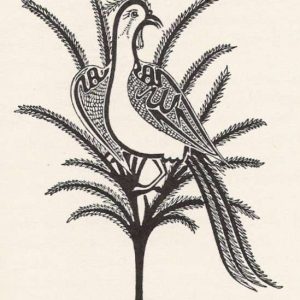
Mishkín-Qalam was the leading calligrapher of Persia in his day, celebrated across the Persian world and beyond for a hand of extraordinary beauty and range. ʻAbdu’l-Bahá onunla bir saniye olarak tanımlandı Mír ʻImád, onu, en ünlü Pers hatatıyla karşılaştırarak Safevi dönemi. He was also a poet, a skilled astronomer, and a noted mystic, and before becoming a Bahá’í he belonged to the Niʻmatu’lláhí Sufi order. He is best remembered for figural calligraphy, in which sacred phrases are shaped into living forms, most famously a rooster composed of Arabic letters that symbolises the dawn of a new day. His design of the invocation “Yá Baháʼu’l-Abhá“ hat sanatındaki formu haline geldi En Yüce İsim recognised by Bahá’ís everywhere.
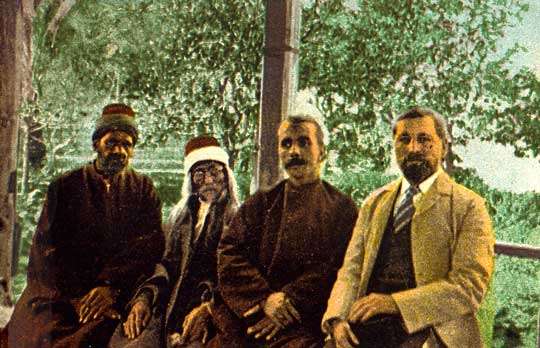
Photos of Mishkín-Qalam
Keşfedin Galeri
Mishkín-Qalam's Art
Keşfedin Hat Çalışmaları
Erken Yaşamı ve Ailesi
“Gate of Shiraz” by Harold F Weston, Qur’an Gate, Shiraz, Iran
Mishkín-Qalam was born Mírzá Ḥusayn-i-Isfahání in 1824, in Shiraz, in the province of Fars. His parents, Fatimih and Haji Muhammad ʻAliy-i-Isfahání, came from merchant families with roots in Shiraz, and the family was associated with Isfahan, where he received his early education. From childhood, he was drawn to the many styles of Persian calligraphy and painting. He married in Isfahan; his wife was Agha Bigum, and they had a daughter, Shah Bigum, and a son, Mirza Ali-Akbar.
Not: Although a small number of published sources have identified Isfahan as Mishkín-Qalam’s birthplace, the weight of historical evidence supports Şiraz. Bu sonuç, araştırmasıyla tutarlıdır Hasan M. Balyuzi belgesel yönetmeni ve yapımcısı tarafından bu biyografi için yürütülen kapsamlı arşiv araştırması yoluyla bağımsız olarak doğrulanmıştır Arman Arian. Buna göre, bu biyografi tanımlar Şiraz as Mishkín-Qalam’s birthplace.
When Was Mishkín-Qalam Born?
The exact year of Mishkín-Qalam’s birth has never been fully settled. Published estimates range from about 1810 to 1826: the 1992 monograph on his art gives 1826, while a note in that same volume records a family account of 1810. This biography places his birth in 1824, gençlik eserlerinden elde edilen ve imzasının yanında yaşıyla birlikte kaydettiği bir tarihtir. Bu eserlerin oluşturulma tarihleri bilindiğinden, doğum yılı bunlardan hesaplanabilir ve sonuç tarihçilerle birlikte gözden geçirilmiştir.
Hayatını Değiştiren Tırnak Portresi
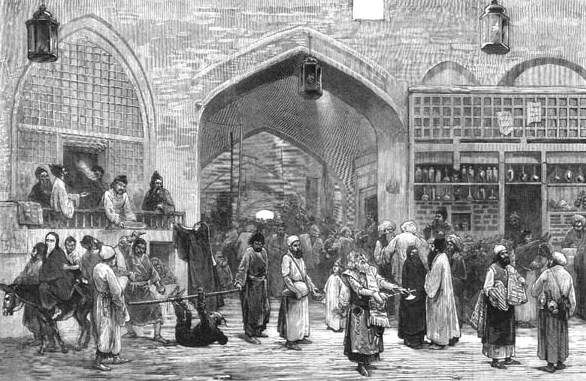
“Illustration of The Grand Bazaar of Tehran” by Unknown Artist
When Mishkín-Qalam was about 25, his father died during a business trip to Tehran, and the young artist travelled to the capital to settle the family’s affairs. While sitting in the shop of a friend, he watched the Grand Vizier pass by in the regal dress of his office. A gifted artist even in his youth, Mishkín-Qalam sketched the minister’s likeness using nothing but the impression of his fingernail on paper, a feat he had perfected. He left the portrait with the shopkeeper and departed.
When the Grand Vizier passed the shop again, the shopkeeper showed him the drawing. The minister was so delighted, and so determined to meet its creator, that the shopkeeper searched until he found the young man and arranged an introduction. That meeting opened the door to the royal court and changed the course of Mishkín-Qalam’s life.
Pers Sarayında Hizmet
The Grand Vizier presented Mishkín-Qalam at the royal court to Náṣiri’d-Dín Sháh, the ruler of Persia. Recognising the young man’s extraordinary talent, the Shah granted him the honorific Mishkín-Qalám, meaning “Musk-Scented Jet-Black Pen,” bu sayede tanınacak ve onu Tebriz'deki Veliaht Prens'e eğitmen olarak atayacaktı. Birkaç yıl Tebriz'de yaşayarak Veliaht Prens'e ve kraliyet ailesinin diğer üyelerine ders verdi, bu arada hattat olarak ünü Fars sarayının en yüksek düzeyinde sağlam bir şekilde yerleşti.
How Mishkín-Qalam Became a Bahá'í
During a journey home to visit his family in Isfahan, Mishkín-Qalam fell into conversation with a believer named Siyyid Mihdi, who first told him of the Bahá’í Faith and its founder, Bahá’u’lláh. The encounter moved him so deeply that, without informing the court or his family, he set out to find Bahá’u’lláh, who was then exiled in Adrianople, in Ottoman territory. On the way he stopped at Aleppo, where the governor, Jawdat Pasha, engaged him to tutor his children. It was in Aleppo that he met the celebrated Bahá’í teacher and historian Nabíl-i-Zarandí, who deepened his understanding of the new Faith.
Mishkín-Qalam then continued to Adrianople, where he entered the presence of Bahá’u’lláh and became one of his scribes. There he began to write out the invocation “Yá Baháʼu’l-Abhá,” the Greatest Name, in many forms, some shaped like birds, and it was his rendering of this phrase that became the design used by Bahá’ís to this day. He came to be counted among the nineteen Apostles of Bahá’u’lláh, a small circle of the Faith’s most devoted early followers, an allegiance that would shape, and gravely endanger, the rest of his life.
Konstantinopolis, Tutuklanma ve Kıbrıs'a Sürgün
Bahá’u’lláh later directed Mishkín-Qalam to Constantinople (Istanbul), where his art quickly won the admiration of leading Persians and Turks, and where he taught the Bahá’í Faith openly. The Persian ambassador, alarmed, pressed the Ottoman authorities to act against him, portraying him as an agitator. He was arrested and sent to Gallipoli, arriving on 16 August 1868, a day before Bahá’u’lláh and his companions passed through on their way to exile in ʻAkká. When the exiles were assigned their destinations, Mishkín-Qalam and three other Bahá’ís were separated from the main party at Haifa and sent instead to Cyprus. From 1868 to 1877 he was held prisoner in the fortress of Famagusta.
Uçurumdaki Sanat
Karanlığın mutlak olduğu yerde, her fildişi tuş vuruşu hafif konuşur.
Reunion in ʻAkká and the Years of Service
When Cyprus passed from Ottoman to British administration, Mishkín-Qalam was released, and in 1886 he was at last able to make his way to ʻAkká and rejoin Bahá’u’lláh. There he devoted himself to transcribing the Bahá’í writings and to creating works of art, described by those who knew him as a man of constant good cheer and quick wit. He completed two volumes of Bahá’u’lláh’s writings, which were printed in Bombay, and he produced a celebrated copy of the Hidden Words in his own hand.
After Bahá’u’lláh passed away in 1892, Mishkín-Qalam continued his services under ʻAbdu’l-Bahá. In 1905 he was sent to India to assist with Bahá’í publishing, and he remained there until illness led ʻAbdu’l-Bahá to invite him back to the Holy Land, where he spent his final years. Across his life his exile carried him through three continents, from Persia and the Ottoman lands of Asia to Cyprus in Europe and, in his later travels, to Africa.
Bir Hat Sanatçısı
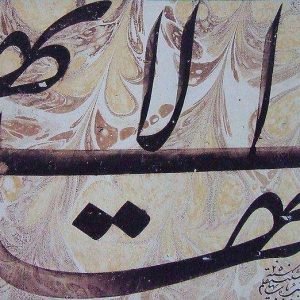
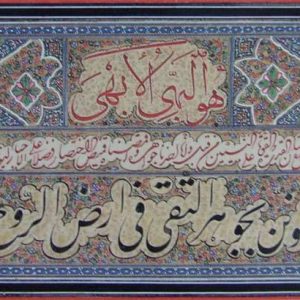
Mishkín-Qalam commanded every major style of Persian and Arabic calligraphy, including nasta’líq, naskh, and shikastih, and he sometimes combined several styles in a single work; one surviving masterpiece renders verses of Bahá’u’lláh in seven principal scripts. He also mastered mirror script and the tradition of figural calligraphy, shaping sacred words into the forms of birds and other images. His most famous motif, the rooster, draws on an old Persian association of the bird with light and the herald of dawn, and stands for the daybreak of a new age. Annemarie Schimmel, the eminent scholar of Islamic calligraphy, counted him among the finest calligraphers of his era and traced his crisp, luminous hand to the tradition of the great Safavid master Mír ʻImád. He is also remembered as the first Bahá’í artist to use calligraphy and painting to express his religious convictions, and his influence can be seen in later masters of the art.
Özenle seçilmiş bir seçkiyi keşfedin eserlerinin seçkisi.
Timeline: The Life of Mishkín-Qalam
-
Şiraz · 1824
Nerede başladı
· Şiraz'da doğdu
Born Mírzá Ḥusayn of Isfahán, in the city of Shiraz, in the province of Fars, Persia.
-
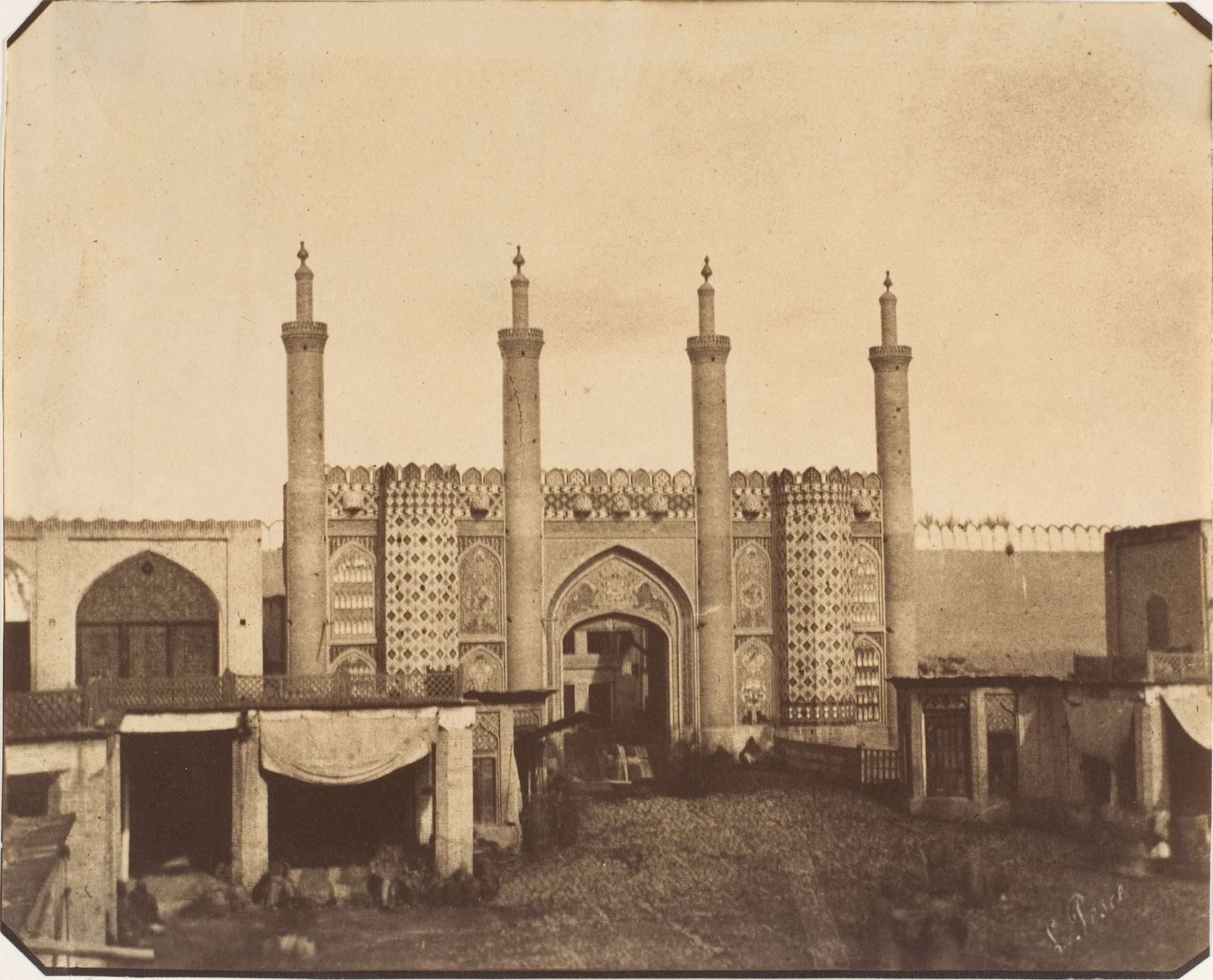
Tahran · y. 1849
Fark edilen bir hediye
c. Başkente
After his father's death in Tehran he travelled to the capital, where a portrait etched with his own fingernail brought him to the notice of the Grand Vizier.
-
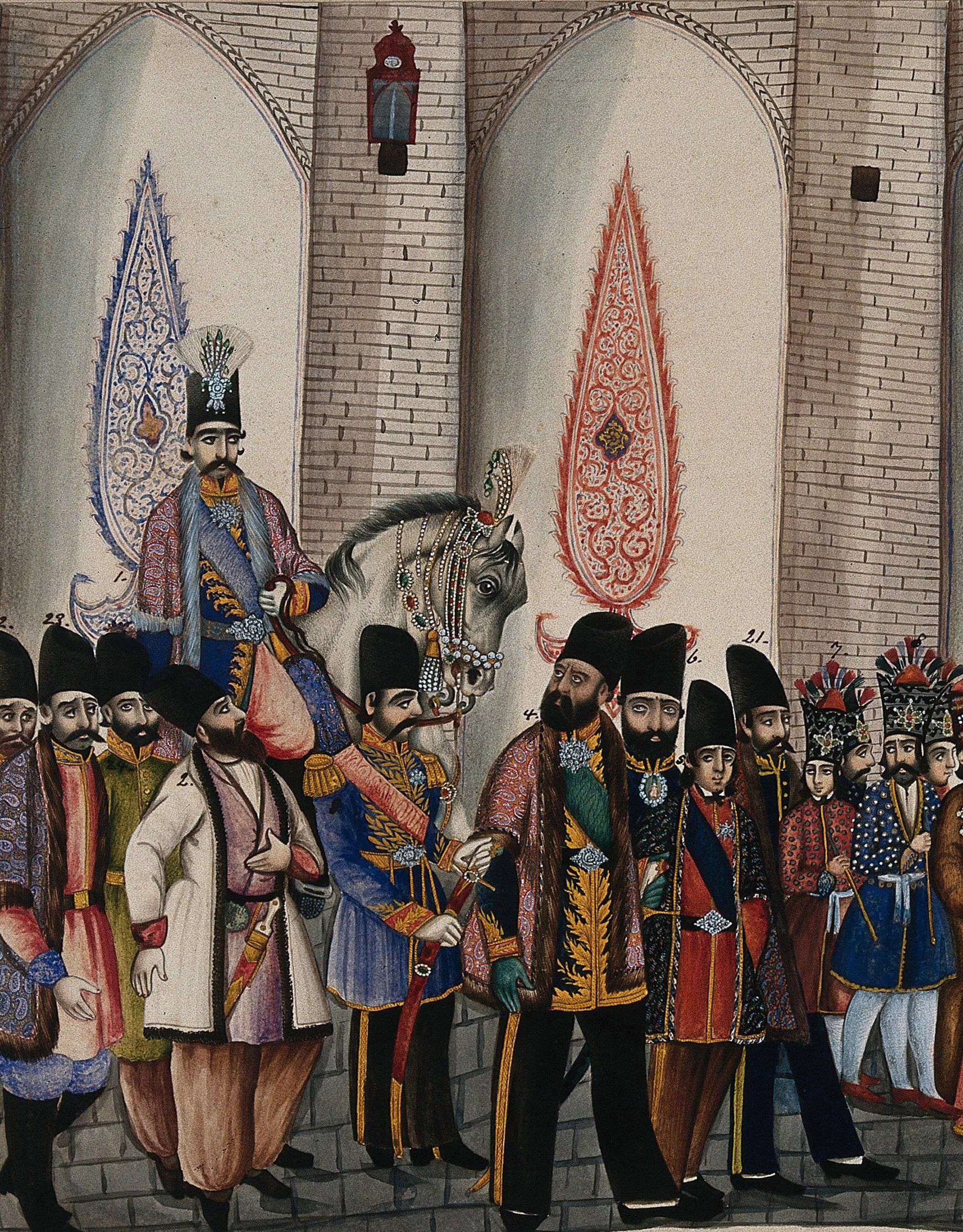
Mahkeme · 1850
Kraliyet mahkemesi
c. · Bahşedilen Bir Unvan
Presented to Náṣiri'd-Dín Sháh, he was granted the title Mishkin-Kalem ve Tebriz'de veliahda lala atandı.
-
Edirne · 1860'lar
Yeni bir inanç
· Halep'te doğrulandı
Hearing of the Bahá'í Faith from Siyyid Mihdí, he set out toward Bahá'u'lláh — confirmed at Aleppo by Nabíl-i-Zarandí, and reaching Adrianople, where he became a scribe and designed the Greatest Name.
-
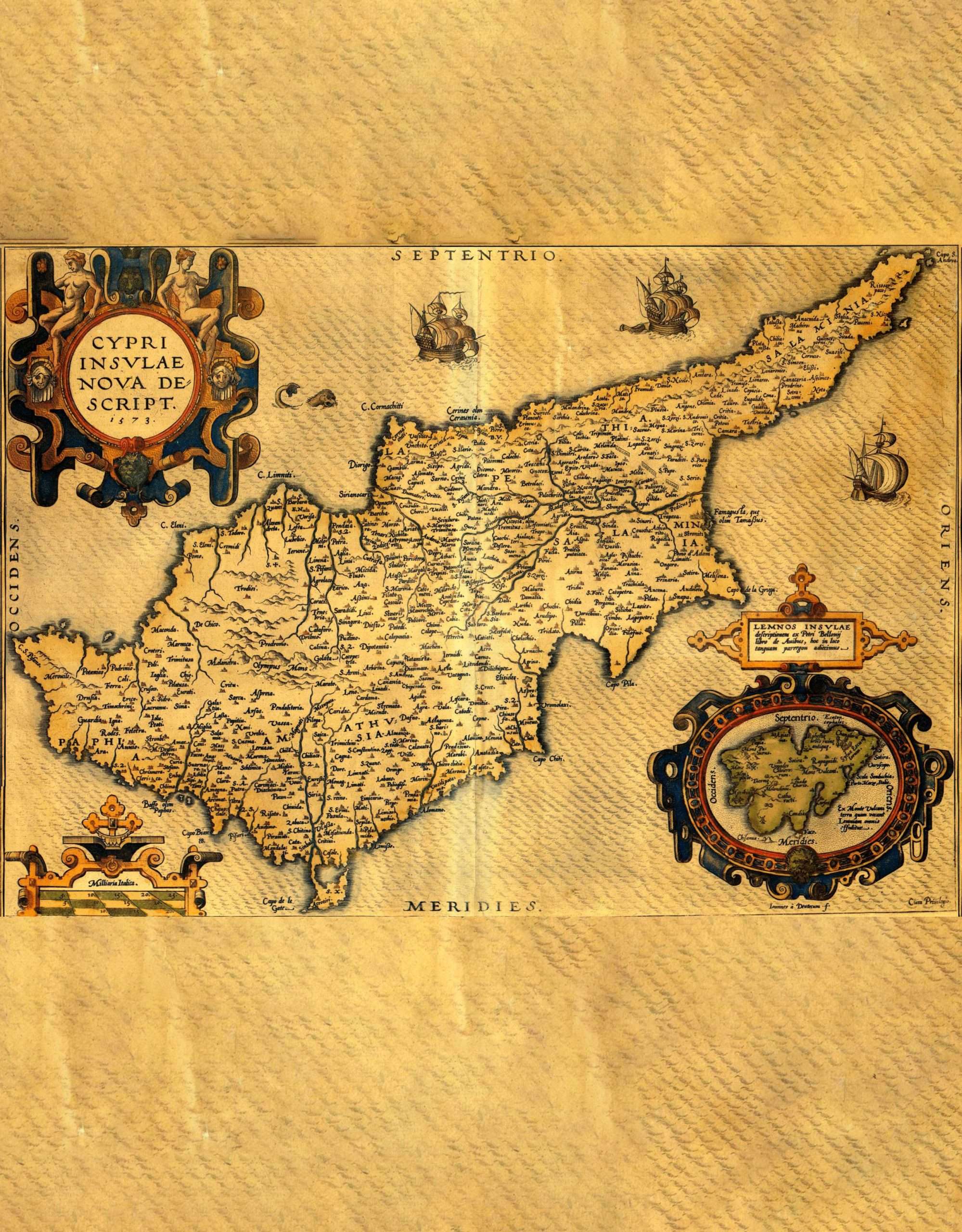
Kıbrıs · 1868
Tutuklama ve sürgün
· Kıbrıs'a gönderildi
Sent by Bahá'u'lláh to Constantinople, he was arrested through the Persian ambassador's influence — reaching Gallipoli on 16 August, and then banished to Cyprus.
-
Gazimağusa · 1868–77
Kale yılları
– Mağusa
Nine years imprisoned within the fortress of Famagusta — yet the pen was never idle.
-
ʻAkká · 1886
Yeniden birleşme
· Arrival in ʻAkká
Freed when Cyprus passed to British rule, he travelled to ʻAkká to rejoin Bahá'u'lláh.
-
Mumbai · 1892
Kayıptan sonra mürekkep
· İki Cilt Basıldı
On the passing of Bahá'u'lláh, he completed two volumes of His writings, printed in Bombay.
-
Hindistan · 1905
Hindistan'a
· Sent by ʻAbdu'l-Bahá
Sent by ʻAbdu'l-Bahá to India, to assist with Bahá'í publishing.
-
Bahjí · 1912
Son bölüm
· Vefatı
Returned to the Holy Land, he passed away on 6 December in ʻAkká, and was laid to rest near Bahjí.
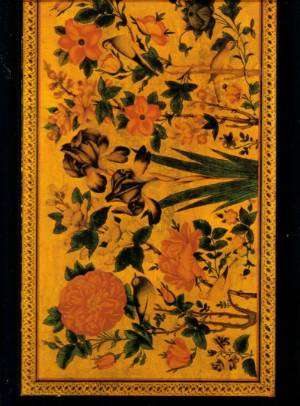
Ölüm ve Miras
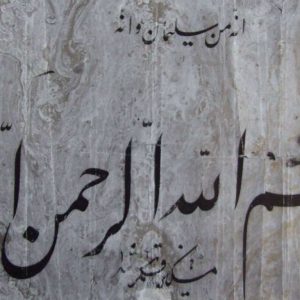
Mishkín-Qalam died on 6 December 1912 in ʻAkká and was buried near Bahji. Among his last works was the design of the calligraphic inscriptions carved on the marble sarcophagus, presented by the Bahá’ís of Burma, that holds the remains of the Báb. He left behind not only transcriptions of the Bahá’í writings but hundreds of calligraphic works that survive in Bahá’í archives, in Holy Places, in private homes, and in museums; his golden rooster is among the treasures of the Harvard Art Museums. Above all, his design of the Greatest Name endures as part of the daily visual life of the worldwide Bahá’í community, and later calligraphers continue to work in his shadow.
Where to See Mishkín-Qalam's Work Today
Mishkín-Qalam’s art survives in public institutions, in Bahá’í archives and Holy Places, and in private hands:
- Harvard Sanat Müzeleri (eskiden Arthur M. Sackler Müzesi), altın horozunun evi.
- British Müzesi.
- The Bahá’í World Centre, Haifa, Uluslararası Arşiv Binası dahil
- The Mansion of Bahji, ʻAkká
Many of his finest pieces are privately owned and rarely seen in public. For this project, the documentary’s producers have visited a number of these private collections in person, and several works have now been documented for the first time. This first-hand access, together with the collection reproduced in the 1992 monograph on his art, makes this one of the most complete records of Mishkín-Qalam’s work gathered in one place.
Tam bir menşe bilgisi, ebatlar ve konumlar içeren özenle seçilmiş bir koleksiyon için Hat Eserleri hakkındaki özel sayfayı ziyaret edin.
The Book on Mishkín-Qalam's Art
The most substantial published record of Mishkín-Qalam’s art is the 1992 monograph Mishkín-Qalam: XIX Century Artist & Calligrapher (Farsça başlık: مشکین قلم: هنرمند خط نگار قرن نوزدهم). Bu eser, Dr. Vahid Rafati ve Profesör Annemarie Schimmel'in giriş yazılarıyla birlikte hüsn-i hat sanatının reprodüksiyonlarını bir araya getirmektedir ve sanatçının eserleri üzerine yapılmış çok az sayıdaki özel çalışmadan biri olma özelliğini korumaktadır. Söz konusu ciltte yer alan hat eserleri, bu sitede sunulan koleksiyonun aynısıdır.
- Başlık: Mishkín-Qalam: XIX Century Artist & Calligrapher (مشکین قلم: هنرمند خط نگار قرن نوزدهم)
- Denemeler / katkıda bulunanlar: Vahid Rafati ve Annemarie Schimmel (giriş yazıları); Society for Persian Letters & Arts, Landegg Akademisi, İsviçre tarafından hazırlanmıştır.
- Dil Farsça, biraz İngilizce ile
- İlk yayınlanma: 1992'de, Almanya'nın Darmstadt şehrinde, Reyhani tarafından
- Biçim: 8½ × 11 inches, 87 pages
- ISBN: 3906714012 (3-90671-401-2)
Bir kopyasını satın almak için ilginizi kaydedin.
The Award-Winning Mishkín-Qalam Documentary
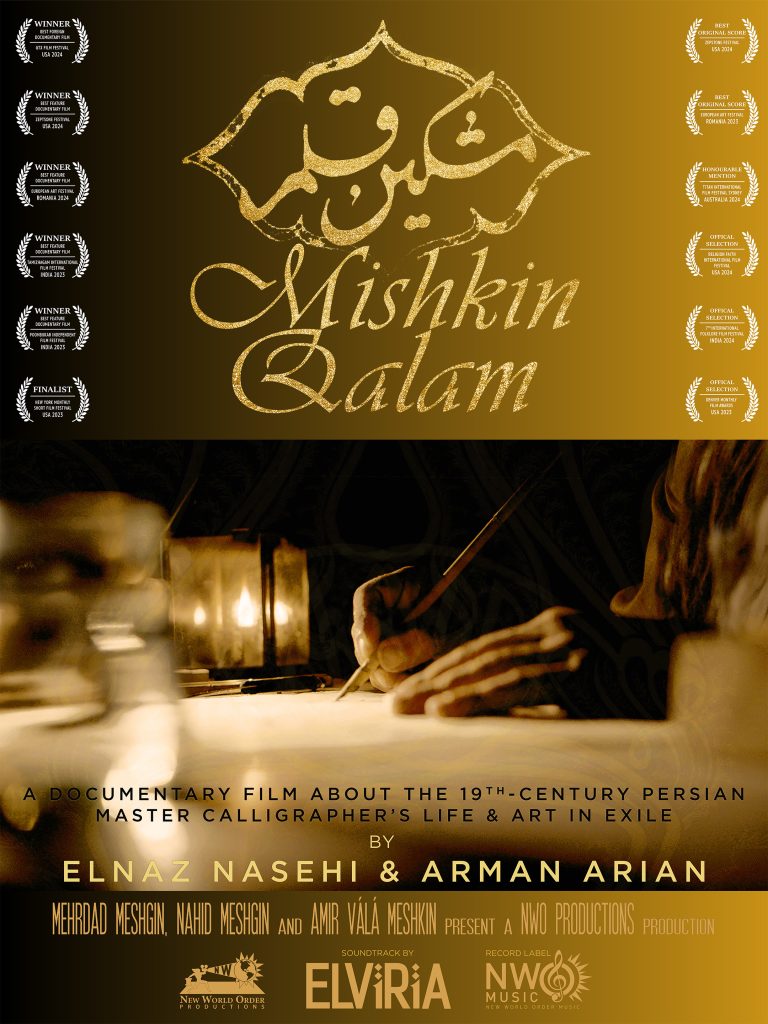
For generations, the story of Mishkín-Qalam has been passed down through his family, through stories, memories, and records preserved over time. This documentary brings that story together after years of research by his descendants and a dedicated team of researchers. Directed by researcher Arman Arian, and featuring the first-hand family knowledge of Mishkín-Qalam’s great-great-grandson Amir Válá Meshkin, the film draws on visits to public and private collections and conversations with scholars, historians, and others who have studied his life and work. It brings together family history and historical research to tell the story of a remarkable calligrapher whose life took him from the royal court of Persia to imprisonment and exile, without ever putting down his pen. The documentary and its original music have received multiple awards, which adds further recognition to a project that began with a simple desire to preserve and share the story of Mishkín-Qalam for generations to come.
Sıkça Sorulan Sorular
What does "Mishkín-Qalam" mean?
“Mishkín-Qalam” means “The Musk-scented Jet-Black Pen.” Bu, Pers Kralı Nasreddin Şah tarafından sanatçı Mirza Hüseyin'e sanatının takdir edilmesi amacıyla verilen bir unvandı ve sanatçı, İran genelinde ve ötesinde bu unvanla tanındı.
When and where was Mishkín-Qalam born?
Bu biyografide, onun 1824 yılında, Fars eyaletinin Şiraz kentinde, Pers’te (günümüz İran’ı) doğduğu belirtilmektedir. Yayınlanmış kaynaklarda farklılıklar görülmekte olup, tarihler yaklaşık 1810 ile 1826 arasında değişmektedir; bir kaynakta ise doğum yeri olarak ailesinin yaşadığı İsfahan belirtilmektedir. 1824 tarihi, yazarın kendi yaşını yazdığı gençlik dönemine ait eserlerinden alınmıştır.
How did Mishkín-Qalam become a Bahá'í?
He first heard of the Bahá’í Faith from a believer named Siyyid Mihdi while travelling home to Isfahan. He then set out to find its founder, Bahá’u’lláh, was confirmed in the Faith at Aleppo by the teacher Nabíl-i-Zarandí, and reached Bahá’u’lláh in Adrianople, where he became one of his scribes.
Why was Mishkín-Qalam imprisoned?
After teaching the Bahá’í Faith openly in Constantinople, he was arrested through the influence of the Persian ambassador and exiled. From 1868 to 1877 he was held prisoner in the fortress of Famagusta in Cyprus, and he spent the rest of his life in exile from Persia.
What is Mishkín-Qalam's most famous work?
En çok, En Yüce İsim olan yakarışın hat tasarımı ile tanınır. “Yá Baháʼu’l-Abhá,” which is still used by Bahá’ís worldwide, and for his figural calligraphy, especially a rooster composed of sacred phrases that now hangs in the Harvard Art Museums.
What was Mishkín-Qalam's connection to the Bahá'í Faith?
He gave up a position at the Persian royal court to follow the Bahá’í Faith and became one of the nineteen Apostles of Bahá’u’lláh, a small group of his most devoted early followers. His faith came at great personal cost, including arrest, imprisonment in Cyprus, and a lifetime of exile.
Kaynaklar ve Araştırma
Bu sitedeki biyografik araştırma şu kişinin/kişilerin çalışmasından yararlanmaktadır: Dr. Vahid Rafati, head of the research department at the Bahá’í World Centre in Haifa; on Professor Annemarie Schimmel’s study of his calligraphy; on ʻAbdu’l-Bahá’s Sadıkların Anıtları; on H. M. Balyuzi’s Eminent Bahá’ís in the Time of Bahá’u’lláh; and on articles by Mishkín-Qalam’s great-grandson Dr. Mehrdad Meshkin, based on family stories, oral history, and genealogy. The accompanying documentary is produced by Mishkín-Qalam’s great-great-grandson, Amir Vala Meşkin, ve Elnaz Nasehi ve Arman Arian. Reproductions of his art are drawn from the producers’ first-hand visits to public and private collections.
Rafati, Vahid. 1992. Mishkín Qalam: XIX Century Artist and Calligrapher. Fars Edebiyatı ve Sanatı Derneği / Landegg Akademisi, İsviçre.
Afnan, Nooshfar B., “Encouragement of the Arts During the Ministry of ‘Abdu’l‑Bahá: The Services of Master Calligrapher Mishkín‑Qalam,” Journal of Bahá’í Studies 33.1–2 (2023): 71–106.
Balyuzi, Hasan M., Eminent Bahá’ís in the Time of Bahá’u’lláh (George Ronald, İngiltere, 1985).
Momen, Moojan, The Cyprus Exiles: The Baha’i Experience in Cyprus (Kalimat Press, 1991).
Memorials of the Faithful, by ‘Abdu’l‑Bahá (Marzieh Gail, trans., Bahá’í Publ. Trust, 1971).
—
Kitaplar ve Monograflar
Balyuzi, Hasan M. Eminent Bahá’ís in the Time of Bahá’u’lláh. London: George Ronald, 1985.
Browne, Edward G. İran'da Bir Yıl. Cambridge: Cambridge University Press, 1926.
Nahçıvani, Bahiyye. Bir Adada Dört Kişi. Oxford: George Ronald, 1983.
Rafati, Vahid, yay. Mishkín-Qalam: XIX Century Artist & Calligrapher. Annemarie Schimmel'in önsözüyle. İsviçre: Landegg Akademisi, 1992.
Şimmel, Annemarie. Hat Sanatı ve İslam Kültürü. New York: New York University Press, 1984.
‘Abdu’l-Bahá. Sadıkların Anıtları. Compiled by Marzieh Gail. Wilmette, IL: Bahá’í Publishing Trust, 1971.
Dergi ve Süreli Yayın Makaleleri
Badiee, Julie Oeming, and Heshmatollah Badiee. “The Calligraphy of Mishkín-Qalam.” Journal of Bahá’í Studies 3, no. 4 (1991): 1–22. Bahá’í Library entry
Meshgin, Mehrdad. “Mishkin-Qalam.” Güneyin Habercisi 3 (April 1985): 2–11.
Motamed, Saeid. “A Glance at Calligraphy in the Bahá’í Faith and the Writings of Mishkín-Qalam.” In Khúsh-i-há’í az Ḳharman-i Adab va Honar, vol. 4, 116–140. 1992.
Diğer Bilimsel / Belgesel Kaynaklar
Meshgin, Mehrdad K. Mişkin-Kalem: Hayatı ve Eseri. Hobart: University of Tasmania Bahá’í Society, 1983.
Arian, Arman, dir. Mişkin-Kalem. İran belgesel film. 2022.
Müze ve Yazma Eser Koleksiyonları
British Museum. “Calligraphic Panel Inscribed ‘Banda-yi Bab-i Bahá,’ Signed by Mishkín-Qalam, AH 1307/1889–90.” Museum object no. W.2010.6015.3. London: British Museum.
Bahá’í World Centre Archives. Calligraphic works by Mishkín-Qalam. Haifa and Acre, Israel. Institutional archival collection.
“Luigi Pesce – [The New Gate, Teheran] – The Metropolitan Museum of Art.” 2026. Metmuseum.Org. 2026. https://www.metmuseum.org/art/collection/search/262204.