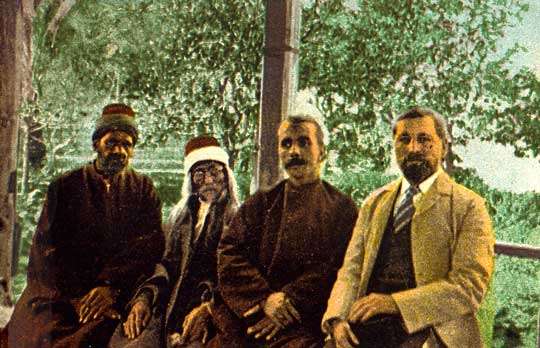
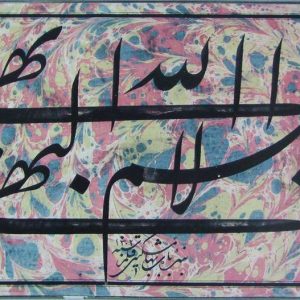
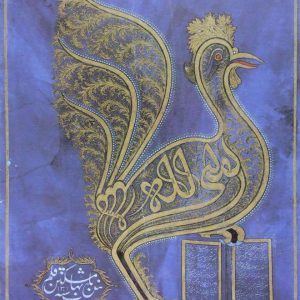
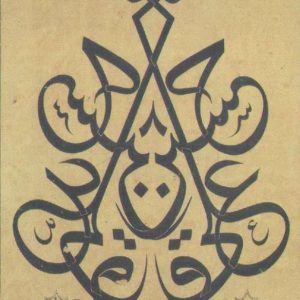
The Official Biography of Mishkín-Qalam
· Shiraz — · ʻAkká
Poet, astronomer, mystic, and the pen behind the dawn of a new age.
Master calligrapher, poet, astronomer, and mystic of 19th-century Persia, and creator of the calligraphic design of the Greatest Name used by Bahá’ís worldwide.
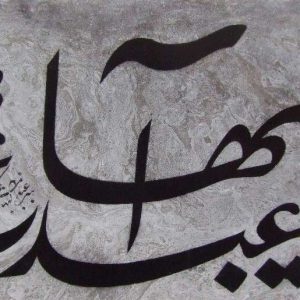
Mishkín-Qalam was born in the early nineteenth century in Persia, and would go on to become one of the most celebrated calligraphers in Bahá’í history. His rendering of the Greatest Name remains one of the most widely recognized symbols of the Bahá’í Faith today, appearing in homes, shrines, and publications around the world.
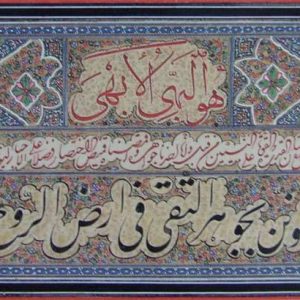
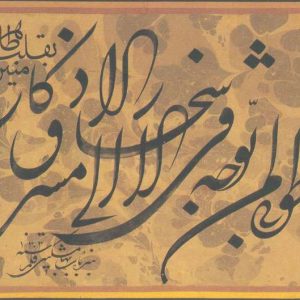
Trained in the classical Persian calligraphic traditions, he mastered nastaʻlíq, naskh, shikastih, and nail scripts. Later, he became known for combining multiple scripts within a single composition, a technical feat that drew comparisons to the great sixteenth-century master Mír ʻImád.
He was one of the foremost calligraphers of 19th-century Persia. Born Mírzá Ḥusayn-i-Isfahání, he rose from a chance encounter in a Tehran bazaar to a post at the royal court, then gave up that comfortable life for his beliefs in unity of humankind. His devotion cost him arrest, nine years of imprisonment in Cyprus, and a lifetime of exile, yet he never stopped creating. His rendering of the Greatest Name is still used by Bahá’ís around the world, and his work hangs today in collections including the Harvard Art Museums.
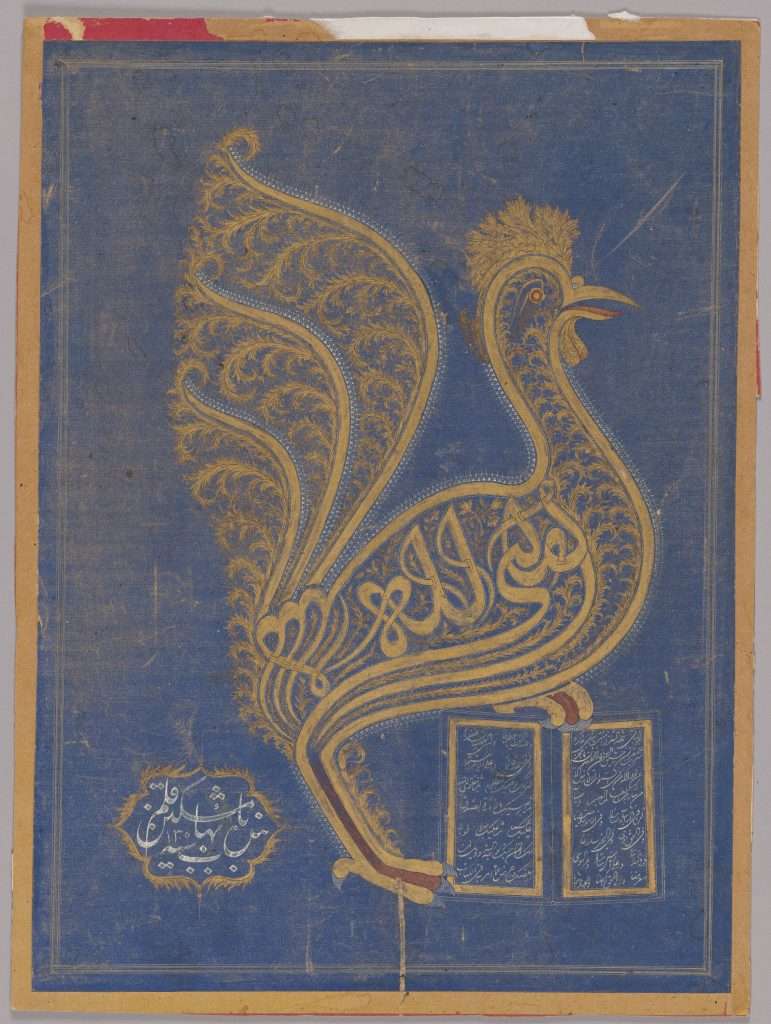
Harvard Art Museums. “The Name of ‘Baha’ullah’ in the Form of a Rooster.” Harvard Art Museums. Accessed August 14, 2026. https://harvardartmuseums.org/collections/object/212748
Archival Record
| Birth Name | Mírzá Ḥusayn-i-Iṣfahání |
|---|---|
| Born | · Shíráz, Fars Province, Persia |
| Died | (aged ~88) · ʻAkká, Ottoman Syria |
| Resting Place | Near the Shrine of Bahá'u'lláh, Bahjí, Acre |
| Titles |
Mishkín-Qalám (“Musk-Scented Jet-Black Pen”, honorific bestowed by Náṣiri'd-Dín Sháh) Apostle of Bahá'u'lláh |
| Styles |
Nastaʻlíq
Shikastih
Naskh
Thuluth
Mirror Script
Nail Script
Zoomorphic (Figural)
|
| Known For | Calligraphic rendering of the Greatest Name (Yá Bahá'u'l-Abhá), Sacred Scribe to Bahá'u'lláh, Calligraphy on the Báb's Sarcophagus, Micrography & Nail-Etching |
| Years Active | – |
| Heritage |
Parents: Ḥájí Muḥammad-ʻAlíy-i-Iṣfahání & Fátimih Spouse: Ágá Bigum · Children: Sháh Bigum, Mírzá ʻAlí-Akbar |
Who Was Mishkín-Qalam?
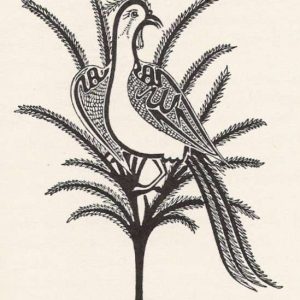
Mishkín-Qalam was the leading calligrapher of Persia in his day, celebrated across the Persian world and beyond for a hand of extraordinary beauty and range. ʻAbdu’l-Bahá described him as a second Mír ʻImád, comparing him to the most famous Persian calligrapher of the Safavid age. He was also a poet, a skilled astronomer, and a noted mystic, and before becoming a Bahá’í he belonged to the Niʻmatu’lláhí Sufi order. He is best remembered for figural calligraphy, in which sacred phrases are shaped into living forms, most famously a rooster composed of Arabic letters that symbolises the dawn of a new day. His design of the invocation “Yá Baháʼu’l-Abhá“ became the calligraphic form of the Greatest Name recognised by Bahá’ís everywhere.
Early Life and Family
“Gate of Shiraz” by Harold F Weston, Qur’an Gate, Shiraz, Iran
Mishkín-Qalam was born Mírzá Ḥusayn-i-Isfahání in 1824, in Shiraz, in the province of Fars. His parents, Fatimih and Haji Muhammad ʻAliy-i-Isfahání, came from merchant families with roots in Shiraz, and the family was associated with Isfahan, where he received his early education. From childhood, he was drawn to the many styles of Persian calligraphy and painting. He married in Isfahan; his wife was Agha Bigum, and they had a daughter, Shah Bigum, and a son, Mirza Ali-Akbar.
Note: Although a small number of published sources have identified Isfahan as Mishkín-Qalam’s birthplace, the weight of historical evidence supports Shiraz. This conclusion is consistent with the research of Hasan M. Balyuzi and has been independently verified through the extensive archival research undertaken for this biography by documentary director and producer Arman Arian. Accordingly, this biography identifies Shiraz as Mishkín-Qalam’s birthplace.
When Was Mishkín-Qalam Born?
The exact year of Mishkín-Qalam’s birth has never been fully settled. Published estimates range from about 1810 to 1826: the 1992 monograph on his art gives 1826, while a note in that same volume records a family account of 1810. This biography places his birth in 1824, a date drawn from works of his youth that he inscribed with his age beside his signature. Because the creation dates of those works are known, his year of birth can be calculated from them, and the result has been reviewed with historians.
The Fingernail Portrait That Changed His Life
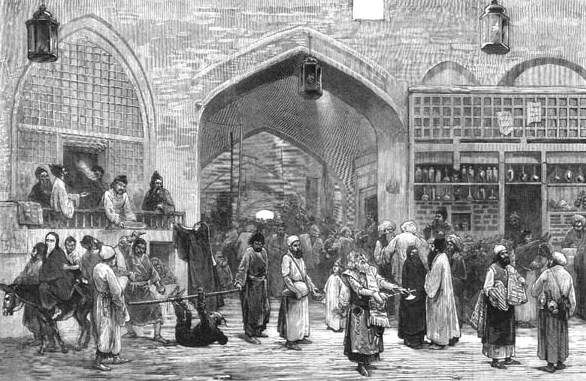
“Illustration of The Grand Bazaar of Tehran” by Unknown Artist
When Mishkín-Qalam was about 25, his father died during a business trip to Tehran, and the young artist travelled to the capital to settle the family’s affairs. While sitting in the shop of a friend, he watched the Grand Vizier pass by in the regal dress of his office. A gifted artist even in his youth, Mishkín-Qalam sketched the minister’s likeness using nothing but the impression of his fingernail on paper, a feat he had perfected. He left the portrait with the shopkeeper and departed.
When the Grand Vizier passed the shop again, the shopkeeper showed him the drawing. The minister was so delighted, and so determined to meet its creator, that the shopkeeper searched until he found the young man and arranged an introduction. That meeting opened the door to the royal court and changed the course of Mishkín-Qalam’s life.
Service in the Persian Royal Court
The Grand Vizier presented Mishkín-Qalám (1824–1912) at the royal court to Náṣiri’d-Dín Sháh, the ruler of Persia. Recognising the young man’s extraordinary talent, the Shah granted him the honorific Mishkín-Qalám, meaning “Musk-Scented Jet-Black Pen,” by which he would become known, and appointed him tutor to the Crown Prince in Tabriz. For several years, he lived in Tabriz, teaching the Crown Prince and other members of the royal family, while his reputation as a calligrapher became firmly established at the highest level of the Persian court.
How Mishkín-Qalam Became a Bahá'í
During a journey home to visit his family in Isfahan, Mishkín-Qalam fell into conversation with a believer named Siyyid Mihdi, who first told him of the Bahá’í Faith and its founder, Bahá’u’lláh. The encounter moved him so deeply that, without informing the court or his family, he set out to find Bahá’u’lláh, who was then exiled in Adrianople, in Ottoman territory. On the way he stopped at Aleppo, where the governor, Jawdat Pasha, engaged him to tutor his children. It was in Aleppo that he met the celebrated Bahá’í teacher and historian Nabíl-i-Zarandí, who deepened his understanding of the new Faith.
Mishkín-Qalam then continued to Adrianople, where he entered the presence of Bahá’u’lláh and became one of his scribes. There he began to write out the invocation “Yá Baháʼu’l-Abhá,” the Greatest Name, in many forms, some shaped like birds, and it was his rendering of this phrase that became the design used by Bahá’ís to this day. He came to be counted among the nineteen Apostles of Bahá’u’lláh, a small circle of the Faith’s most devoted early followers, an allegiance that would shape, and gravely endanger, the rest of his life.
Constantinople, Arrest, and Exile to Cyprus
Bahá’u’lláh later directed Mishkín-Qalam to Constantinople (Istanbul), where his art quickly won the admiration of leading Persians and Turks, and where he taught the Bahá’í Faith openly. The Persian ambassador, alarmed, pressed the Ottoman authorities to act against him, portraying him as an agitator. He was arrested and sent to Gallipoli, arriving on 16 August 1868, a day before Bahá’u’lláh and his companions passed through on their way to exile in ʻAkká. When the exiles were assigned their destinations, Mishkín-Qalam and three other Bahá’ís were separated from the main party at Haifa and sent instead to Cyprus. From 1868 to 1877 he was held prisoner in the fortress of Famagusta.
Art in the Abyss
Where darkness is absolute, every ivory stroke of light speaks.
Reunion in ʻAkká and the Years of Service
When Cyprus passed from Ottoman to British administration, Mishkín-Qalam was released, and in 1886 he was at last able to make his way to ʻAkká and rejoin Bahá’u’lláh. There he devoted himself to transcribing the Bahá’í writings and to creating works of art, described by those who knew him as a man of constant good cheer and quick wit. He completed two volumes of Bahá’u’lláh’s writings, which were printed in Bombay, and he produced a celebrated copy of the Hidden Words in his own hand.
After Bahá’u’lláh passed away in 1892, Mishkín-Qalam continued his services under ʻAbdu’l-Bahá. In 1905 he was sent to India to assist with Bahá’í publishing, and he remained there until illness led ʻAbdu’l-Bahá to invite him back to the Holy Land, where he spent his final years. Across his life his exile carried him through three continents, from Persia and the Ottoman lands of Asia to Cyprus in Europe and, in his later travels, to Africa.
A Master of Calligraphy
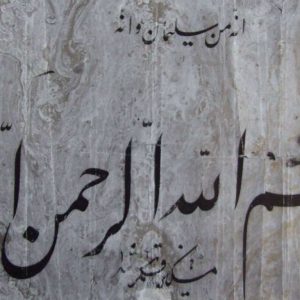
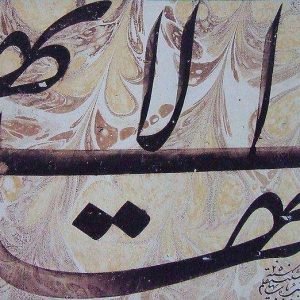
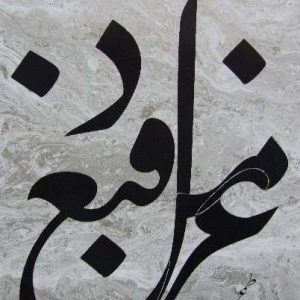
Mishkín-Qalam commanded every major style of Persian and Arabic calligraphy, including nasta’líq, naskh, and shikastih, and he sometimes combined several styles in a single work; one surviving masterpiece renders verses of Bahá’u’lláh in seven principal scripts. He also mastered mirror script and the tradition of figural calligraphy, shaping sacred words into the forms of birds and other images. His most famous motif, the rooster, draws on an old Persian association of the bird with light and the herald of dawn, and stands for the daybreak of a new age. Annemarie Schimmel, the eminent scholar of Islamic calligraphy, counted him among the finest calligraphers of his era and traced his crisp, luminous hand to the tradition of the great Safavid master Mír ʻImád. He is also remembered as the first Bahá’í artist to use calligraphy and painting to express his religious convictions, and his influence can be seen in later masters of the art.
You can explore a curated selection of his work.
Timeline: The Life of Mishkín-Qalam
-
Shiraz · 1824
Where it began
· Born in Shiraz
Born Mírzá Ḥusayn of Isfahán, in the city of Shiraz, in the province of Fars, Persia.
-
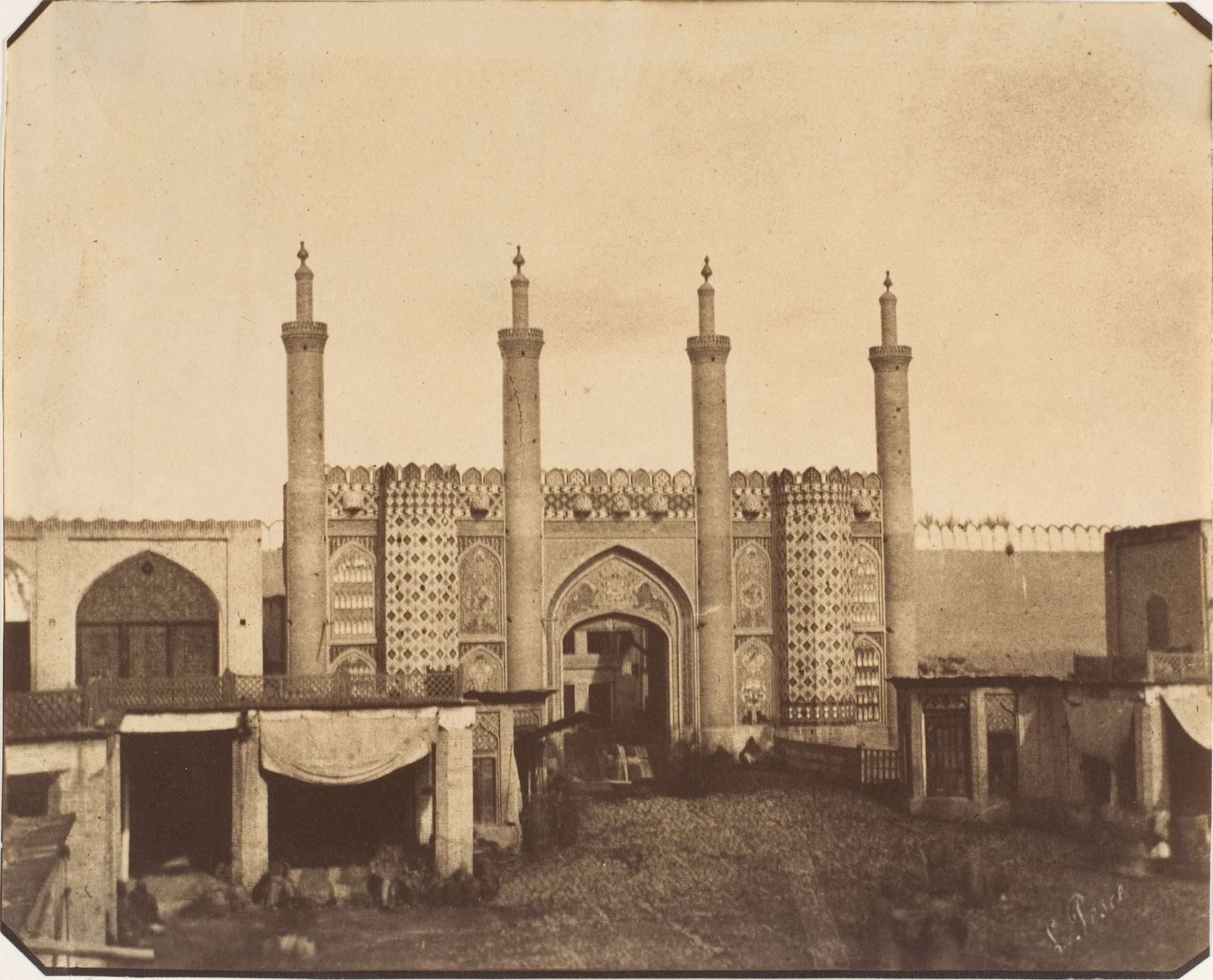
Tehran · c. 1849
A gift noticed
c. · To the Capital
After his father's death in Tehran he travelled to the capital, where a portrait etched with his own fingernail brought him to the notice of the Grand Vizier.
-
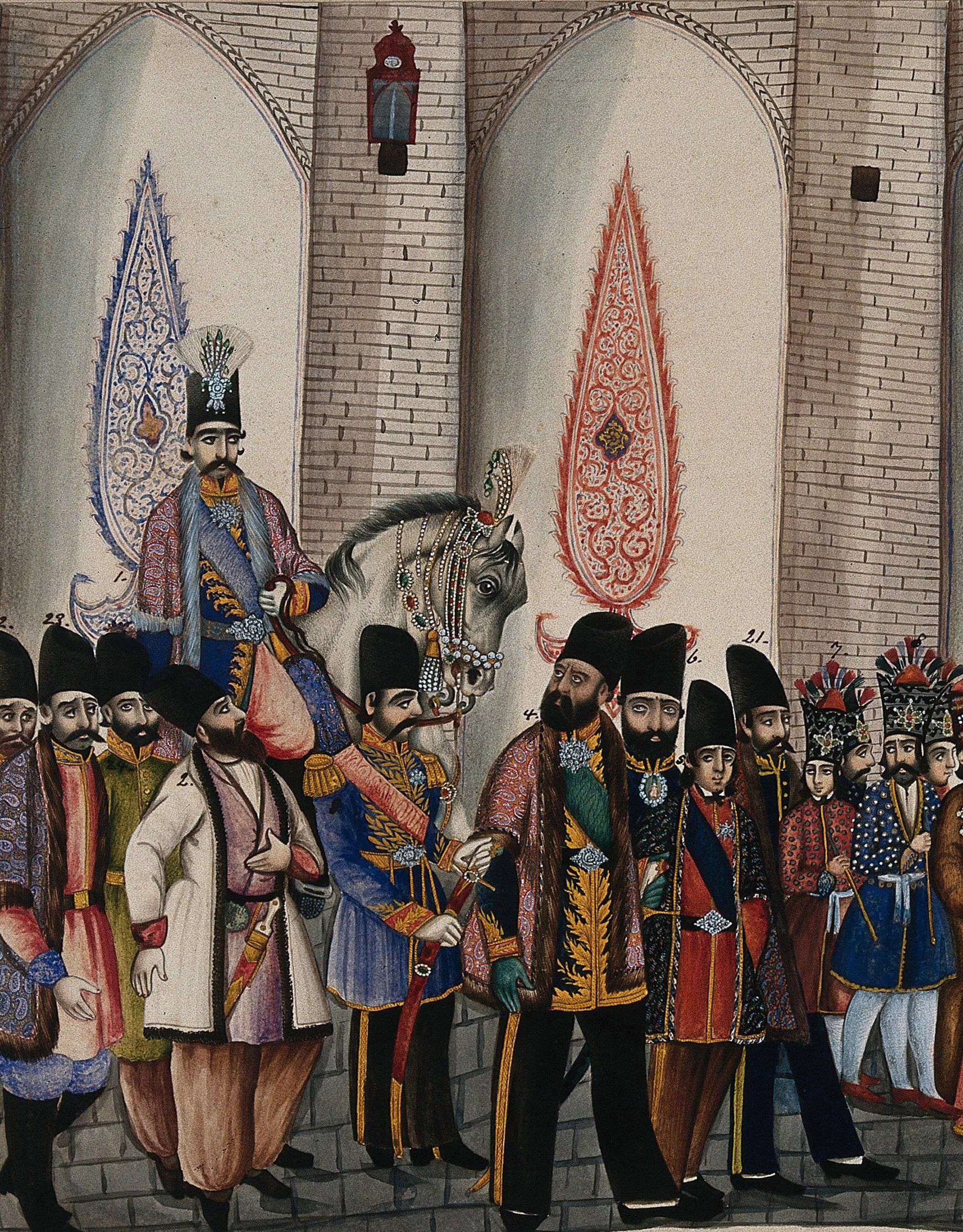
The Court · 1850
The royal court
c. · A Title Bestowed
Presented to Náṣiri'd-Dín Sháh, he was granted the title Mishkín-Qalam and appointed tutor to the Crown Prince in Tabriz.
-
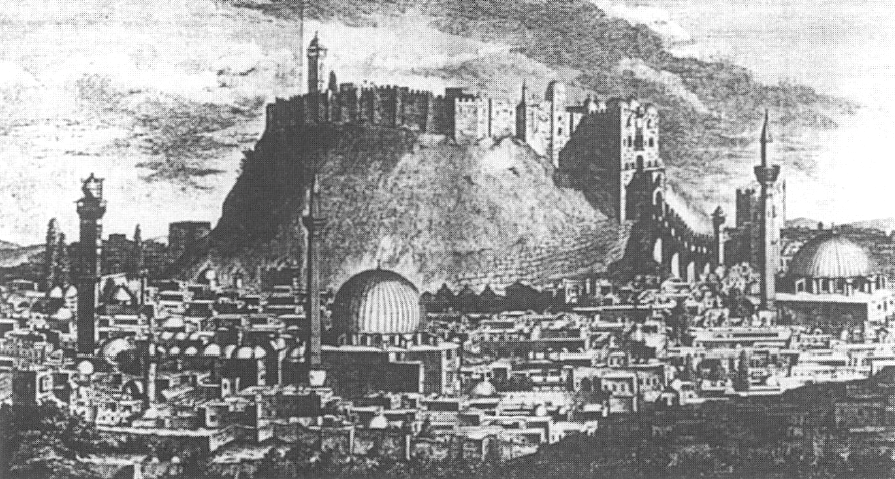
Adrianople · 1860s
A new faith
· Confirmed at Aleppo
Hearing of the Bahá'í Faith from Siyyid Mihdí, he set out toward Bahá'u'lláh — confirmed at Aleppo by Nabíl-i-Zarandí, and reaching Adrianople, where he became a scribe and designed the Greatest Name.
-
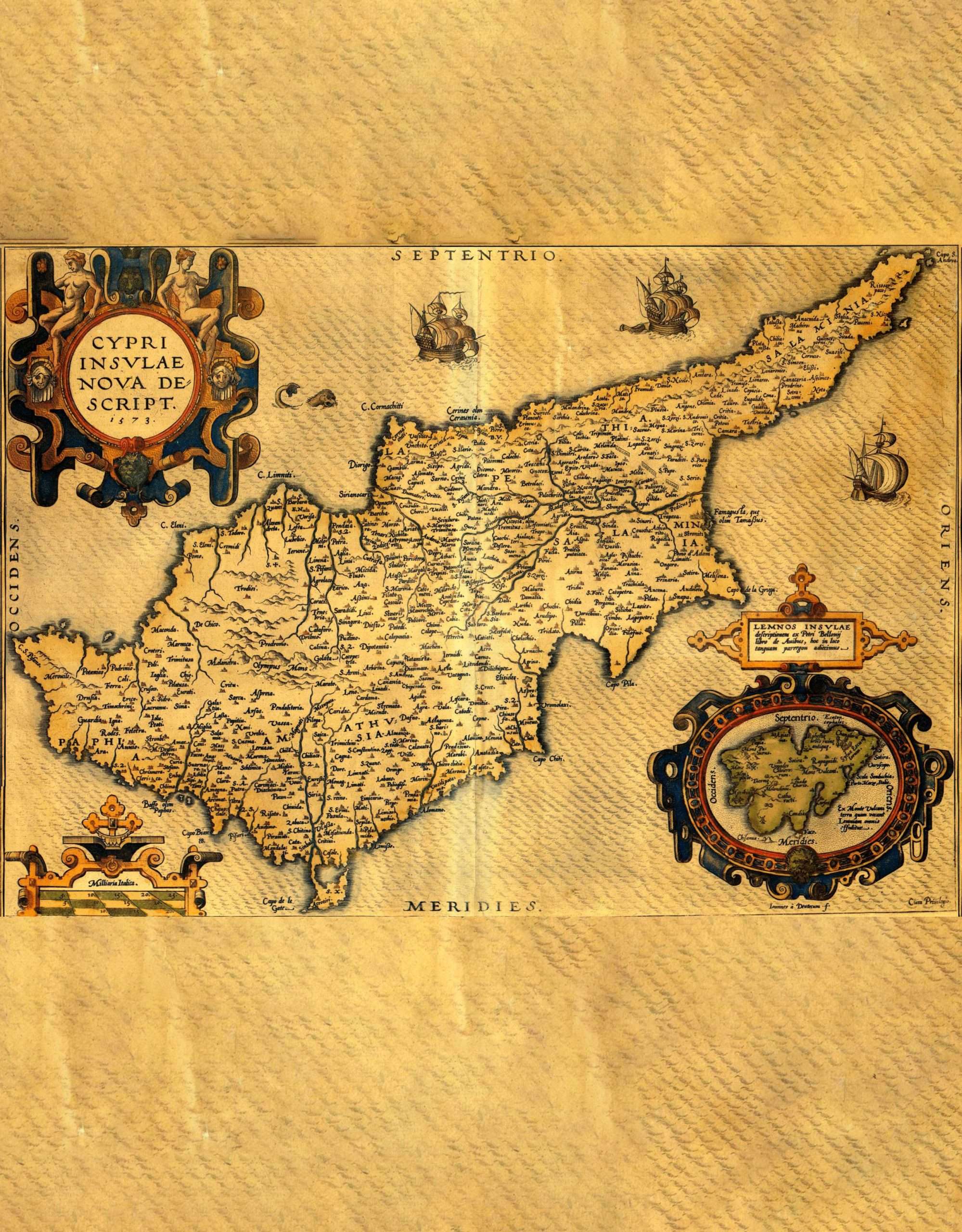
Cyprus · 1868
Arrest & exile
· Sent to Cyprus
Sent by Bahá'u'lláh to Constantinople, he was arrested through the Persian ambassador's influence — reaching Gallipoli on 16 August, and then banished to Cyprus.
-
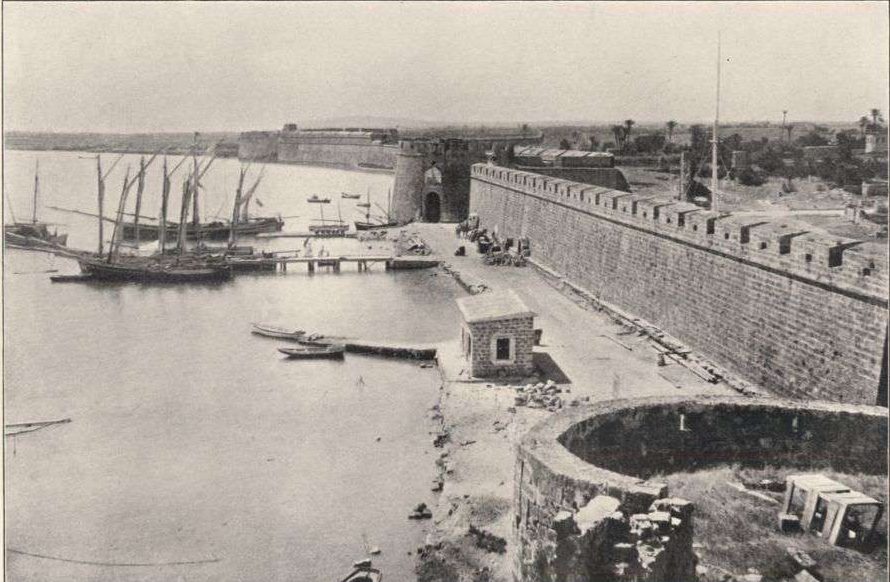
Famagusta · 1868–77
The fortress years
– · Famagusta
Nine years imprisoned within the fortress of Famagusta — yet the pen was never idle.
-
ʻAkká · 1886
Reunion
· Arrival in ʻAkká
Freed when Cyprus passed to British rule, he travelled to ʻAkká to rejoin Bahá'u'lláh.
-
Bombay · 1892
Ink after loss
· Two Volumes Printed
On the passing of Bahá'u'lláh, he completed two volumes of His writings, printed in Bombay.
-
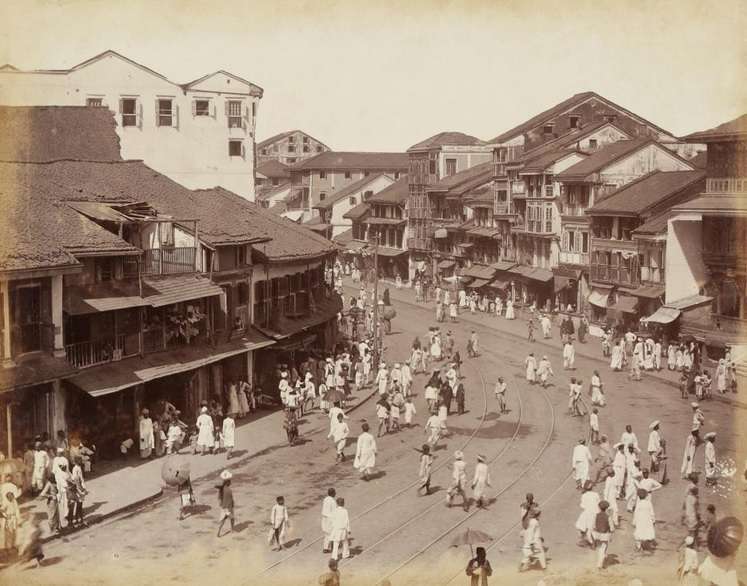
India · 1905
To India
· Sent by ʻAbdu'l-Bahá
Sent by ʻAbdu'l-Bahá to India, to assist with Bahá'í publishing.
-
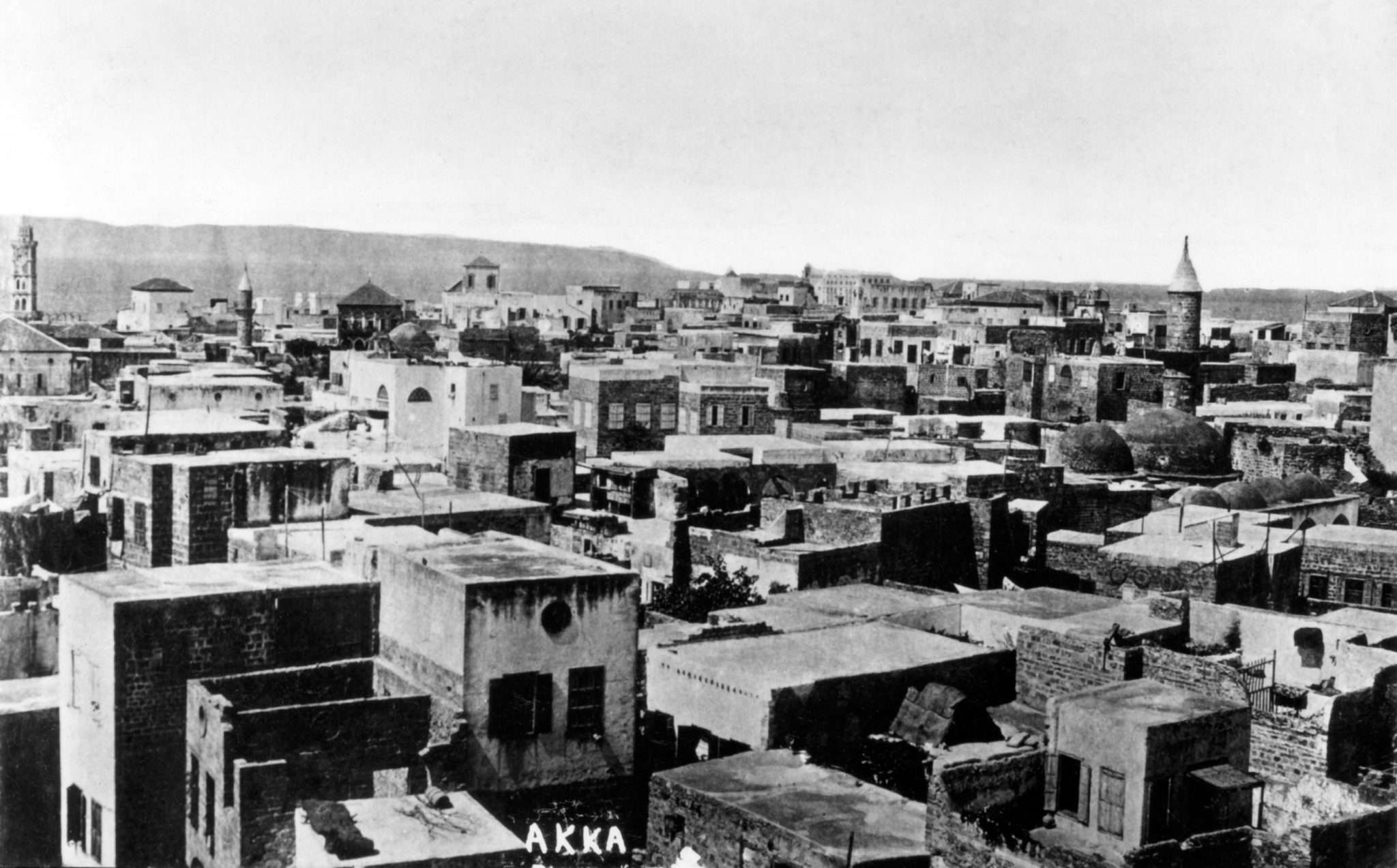
Bahjí · 1912
The final chapter
· His Passing
Returned to the Holy Land, he passed away on 6 December in ʻAkká, and was laid to rest near Bahjí.
Death and Legacy
Mishkín-Qalam died on 6 December 1912 in ʻAkká and was buried near Bahji. Among his last works was the design of the calligraphic inscriptions carved on the marble sarcophagus, presented by the Bahá’ís of Burma, that holds the remains of the Báb. He left behind not only transcriptions of the Bahá’í writings but hundreds of calligraphic works that survive in Bahá’í archives, in Holy Places, in private homes, and in museums; his golden rooster is among the treasures of the Harvard Art Museums. Above all, his design of the Greatest Name endures as part of the daily visual life of the worldwide Bahá’í community, and later calligraphers continue to work in his shadow.
Where to See Mishkín-Qalam's Work Today
Mishkín-Qalam’s art survives in public institutions, in Bahá’í archives and Holy Places, and in private hands:
- Harvard Art Museums (formerly the Arthur M. Sackler Museum), home to his golden rooster:
- The British Museum:
- The Bahá’í World Centre, Haifa, including the International Archives Building
- The Mansion of Bahji, ʻAkká
Many of his finest pieces are privately owned and rarely seen in public. For this project, the documentary’s producers have visited a number of these private collections in person, and several works have now been documented for the first time. This first-hand access, together with the collection reproduced in the 1992 monograph on his art, makes this one of the most complete records of Mishkín-Qalam’s work gathered in one place.
For a curated selection with full provenance, sizes, and locations, visit the dedicated page on his Calligraphic Works.
The Book on Mishkín-Qalam's Art
The most substantial published record of Mishkín-Qalam’s art is the 1992 monograph Mishkín-Qalam: XIX Century Artist & Calligrapher (Persian title: مشکین قلم: هنرمند خط نگار قرن نوزدهم). It gathers reproductions of his calligraphy with introductory essays by Dr. Vahid Rafati and Professor Annemarie Schimmel, and it remains one of the very few dedicated studies of his work. The calligraphy reproduced in that volume is the same collection presented on this site.
- Title: Mishkín-Qalam: XIX Century Artist & Calligrapher (مشکین قلم: هنرمند خط نگار قرن نوزدهم)
- Essays / contributors: Vahid Rafati and Annemarie Schimmel (introductions); produced by the Society for Persian Letters & Arts, Landegg Academy, Switzerland
- Language: Persian, with some English
- First published: 1992, in Darmstadt, Germany, by Reyhani
- Format: 8½ × 11 inches, 87 pages
- ISBN: 3906714012 (3-90671-401-2)
Register your interest to purchase a copy.
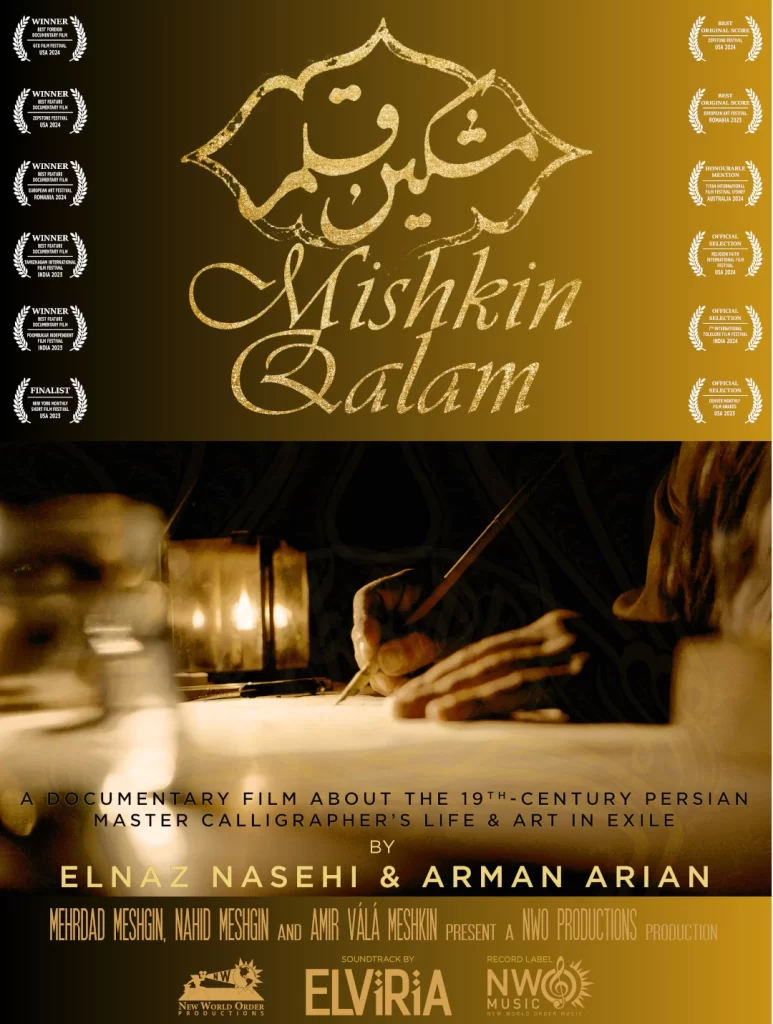
The Award-Winning Mishkín-Qalam Documentary
Mishkín-Qalam’s life and art are the subject of an award-winning documentary film, which has won Best Documentary at multiple international festivals.
Frequently Asked Questions
What does "Mishkín-Qalam" mean?
“Mishkín-Qalam” means “The Musk-scented Jet-Black Pen.” It was an honorific granted to the artist Mirza Husayn by Naser al-Din Shah, the King of Persia, in recognition of his artistry, and he became known by it throughout Persia and beyond.
When and where was Mishkín-Qalam born?
This biography places his birth in 1824, in Shiraz, in the province of Fars, Persia (modern-day Iran). The published record varies, with dates ranging from about 1810 to 1826, and one account giving his birthplace as Isfahan, where his family lived. The 1824 date is drawn from youth works he inscribed with his own age.
How did Mishkín-Qalam become a Bahá'í?
He first heard of the Bahá’í Faith from a believer named Siyyid Mihdi while travelling home to Isfahan. He then set out to find its founder, Bahá’u’lláh, was confirmed in the Faith at Aleppo by the teacher Nabíl-i-Zarandí, and reached Bahá’u’lláh in Adrianople, where he became one of his scribes.
Why was Mishkín-Qalam imprisoned?
After teaching the Bahá’í Faith openly in Constantinople, he was arrested through the influence of the Persian ambassador and exiled. From 1868 to 1877 he was held prisoner in the fortress of Famagusta in Cyprus, and he spent the rest of his life in exile from Persia.
What is Mishkín-Qalam's most famous work?
He is best known for his calligraphic design of the Greatest Name, the invocation “Yá Baháʼu’l-Abhá,” which is still used by Bahá’ís worldwide, and for his figural calligraphy, especially a rooster composed of sacred phrases that now hangs in the Harvard Art Museums.
What was Mishkín-Qalam's connection to the Bahá'í Faith?
He gave up a position at the Persian royal court to follow the Bahá’í Faith and became one of the nineteen Apostles of Bahá’u’lláh, a small group of his most devoted early followers. His faith came at great personal cost, including arrest, imprisonment in Cyprus, and a lifetime of exile.
Sources & Research
The biographical research on this site draws on the work of Dr. Vahid Rafati, head of the research department at the Bahá’í World Centre in Haifa; on Professor Annemarie Schimmel’s study of his calligraphy; on ʻAbdu’l-Bahá’s Memorials of the Faithful; on H. M. Balyuzi’s Eminent Bahá’ís in the Time of Bahá’u’lláh; and on articles by Mishkín-Qalam’s great-grandson Mehrdad Meshkin, based on family stories, oral history, and genealogy. The accompanying documentary is produced by Mishkín-Qalam’s great-great-grandson, Amir Vala Meshkin, and by Arman Arian. Reproductions of his art are drawn from Mishkín-Qalam: XIX Century Artist & Calligrapher (Society for Persian Letters & Arts, Landegg Academy, Switzerland; published in Darmstadt, Germany by Reyhani, 1992; ISBN 3906714012) and from the producers’ first-hand visits to public and private collections.
Rafati, Vahid. 1992. Mishkín Qalam: XIX Century Artist and Calligrapher. Society for Persian Letters and Arts / Landegg Academy, Switzerland.
“Luigi Pesce – [The New Gate, Teheran] – The Metropolitan Museum of Art.” 2026. Metmuseum.Org. 2026. https://www.metmuseum.org/art/collection/search/262204.
